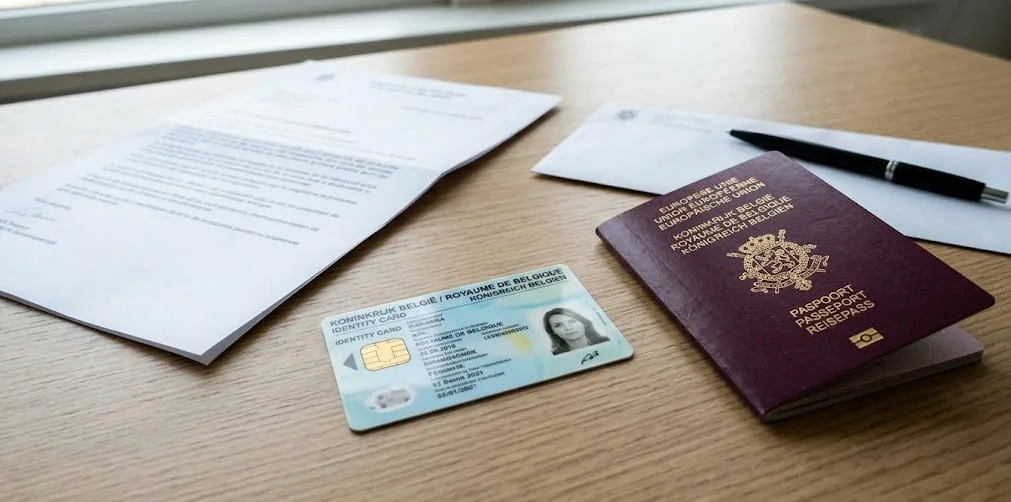
A comprehensive overview of all Belgian visa categories — short-stay Schengen, long-stay D visa, work visas, student visas, and family reunification. Find the right visa for your situation.
Belgium has two main visa categories: short-stay C visas (Schengen, up to 90 days) and long-stay D visas (national, more than 90 days). The type of visa you need depends on your nationality, the purpose of your visit, and how long you plan to stay. This page covers every Belgian visa type with requirements, processing times, and costs. For detailed residence permit information, see our dedicated guide.
The Schengen C visa allows stays of up to 90 days within any 180-day period across all 27 Schengen countries. Belgium is a full Schengen member.
Who Needs a C Visa?
EU/EEA/Swiss citizens: No visa needed (freedom of movement)
Visa-exempt nationalities: No visa for stays up to 90 days (US, UK, Canada, Australia, Japan, South Korea, Brazil, and ~60 other countries — check the Belgian MFA website)
Processing: 15 calendar days from application submission. Complex cases may take up to 45 days. Fee: €80 (adults), €40 (children 6–12), free (children under 6).
Long-Stay Visa (D Visa)
The D visa is required for any stay in Belgium exceeding 90 days. It is always linked to a specific purpose — you must first obtain the underlying authorisation (work permit, professional card, student enrollment) before applying for the D visa.
D Visa for Employment
For non-EU employees with an approved single permit or work permit B. The employer initiates the permit process; once approved, the employee applies for a D visa at the Belgian embassy. After arrival, the employee registers at the commune and receives a residence card (A card).
D Visa for Self-Employment / Investment
For non-EU entrepreneurs with an approved professional card. Covers freelancers, investors, and company directors actively managing their Belgian business. After approval of the professional card, apply for D visa → enter Belgium → commune registration → residence card.
D Visa for Students
For non-EU students enrolled full-time at a recognised Belgian educational institution. Requirements include: enrollment letter, proof of sufficient funds (min. ~€730/month for 2026), health insurance, and clean criminal record. Students can work part-time (20 hours/week during term, unlimited during holidays).
D Visa for Family Reunification
For family members (spouse/partner, children under 18, dependent parents in some cases) of a person legally residing in Belgium. The sponsor must meet income requirements (min. ~€2,048/month net for 2026), have adequate housing, and hold health insurance. Processing: 4–9 months through the Immigration Office.
Where to Apply
All Belgian visa applications are submitted at the Belgian embassy or consulate in your country of residence, or at an authorised visa application centre (e.g., VFS Global or TLS Contact, depending on the country). Applications cannot be submitted from within Belgium (with limited exceptions).
Belgium offers two main categories: short-stay Schengen C visa (up to 90 days — tourism, business, conferences) and long-stay D visa (more than 90 days — work, self-employment, study, family reunification, retirement). EU/EEA/Swiss citizens do not need a visa.
It depends on your nationality. EU/EEA/Swiss citizens: no visa needed. Citizens of visa-exempt countries (US, UK, Canada, Australia, Japan, etc.): no visa for stays up to 90 days. All other nationalities: Schengen C visa required for short stays, D visa for long stays.
A C visa (Schengen visa) allows short stays up to 90 days within a 180-day period across the Schengen Area. A D visa (national visa) allows long stays exceeding 90 days in Belgium specifically. D visas are for work, self-employment, study, or family reunification.
C visa (Schengen): 15 calendar days, up to 45 days in complex cases. D visa (long-stay): 2–4 weeks after the underlying permit (work permit, professional card, student enrollment) is approved. The underlying permit processing adds 1–4 months depending on type.
Schengen C visa: €80 for adults, €40 for children 6–12, free for children under 6. D visa (long-stay): ~€180. Some nationalities have reduced or waived fees under bilateral agreements. Additional costs include document legalization, translations, and travel insurance.
No. A Schengen C visa (tourist/business visa) does not allow employment in Belgium. To work, you need either a D visa linked to a single permit/work permit, or a professional card for self-employment. Business meetings and conferences are permitted on a C visa, but not paid work.
Generally no. Belgian immigration law requires long-stay visa applications to be filed from your country of residence, not from within Belgium. In limited circumstances, a change of status may be possible, but this is not the standard procedure and should not be relied upon.
Yes, for Schengen C visa applications. Insurance must cover minimum €30,000 in medical expenses and repatriation, and be valid for the entire Schengen Area. For D visa applicants, medical coverage is typically arranged after arrival through Belgian health insurance (mutuelle/ziekenfonds).
Find the Right Belgian Visa for You
Our immigration team helps you identify the correct visa type and manage the full application process.