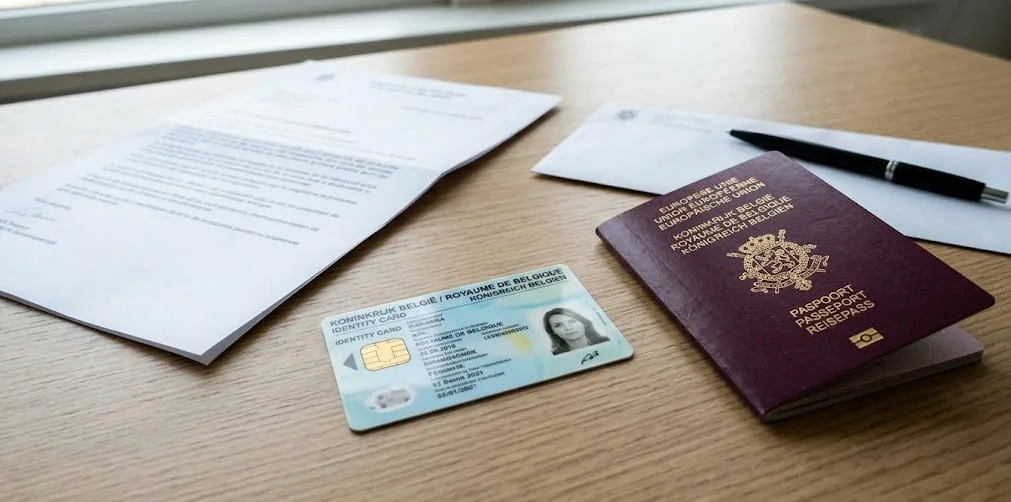
A practical guide to Belgian work permits — which type you need, how to apply, employer obligations, processing times, and common pitfalls. For both employers hiring international talent and employees relocating to Belgium.
By Marie DuboisPublished: April 8, 202610 min read
Hiring non-EU employees in Belgium or relocating for work? The Belgian work permit system has evolved significantly since the 2019 introduction of the single permit, which combines work authorisation and residence permit into one application. This guide explains every permit type, who needs what, and how the application process works in practice.
Quick Decision Tree — Which Permit Do You Need?
EU/EEA/Swiss citizen? → No permit needed. Register at commune within 3 months.
Non-EU employee, staying >90 days? → Single permit (employer files)
Non-EU employee, staying ≤90 days? → Work permit B (employer files)
Highly qualified (salary ≥€58,884)? → EU Blue Card (employer files)
Self-employed / company director? → Professional card (individual files)
Since 2019, the single permit is the default for most non-EU employment situations. How it works:
Employer files application with the regional employment authority (Brussels/Flanders/Wallonia)
Dual review — work component (regional) and residence component (DVZ/OE Immigration Office) assessed in parallel
Labour market test — for standard permits, the authority checks if an EU candidate is available (exemptions for highly qualified, shortage occupations, ICT)
Approval → employee applies for D visa at Belgian embassy
Arrival → commune registration → A card (residence with work authorisation)
Legal deadline: 4 months from complete application. Key requirement: the employer must initiate — employees cannot self-apply.
EU Blue Card
For highly qualified non-EU workers earning at least €58,884/year (2026 threshold):
No labour market test required
Higher education diploma (3+ years) or 5 years professional experience
EU mobility after 12 months — can transfer to another EU country
Accelerated family reunification
Path to EU long-term resident status after 5 years (cumulative across EU)
Professional Card (Self-Employed)
For non-EU nationals exercising self-employed activities in Belgium — freelancers, consultants, and company directors who actively manage their business:
Applied for individually (not employer-initiated)
Requires a business plan demonstrating economic benefit to Belgium
Issued by regional authority (Brussels/Flanders/Wallonia)
It depends: EU citizens need no permit. Non-EU employees (stay >90 days) need a single permit. Short-term (<90 days) use work permit B. Highly qualified workers can apply for EU Blue Card. Self-employed need a professional card. The employer initiates employment-based permits.
Single permit: 2-4 months (legal max 4 months). Work permit B: 2-5 weeks. EU Blue Card: 3-4 months. Professional card: 1-4 months. D visa adds 2-4 weeks after approval.
Yes. EU/EEA/Swiss nationals have automatic right to work. No permit needed. Register at commune within 3 months for E card.
The single permit combines work authorisation and residence into one application. Introduced in 2019, it is the standard permit for non-EU employees staying >90 days. The employer files with the regional authority.
The Belgian employer initiates all employment-based permits. The employee cannot apply independently. For self-employment, the individual applies for a professional card.
The regional authority checks if a suitable EU/Belgian candidate is available before approving a non-EU hire. Exemptions: highly qualified workers, EU Blue Card, ICT transfers, shortage occupations, researchers.
Hire International Talent in Belgium
We manage the full work permit process — from application to commune registration.