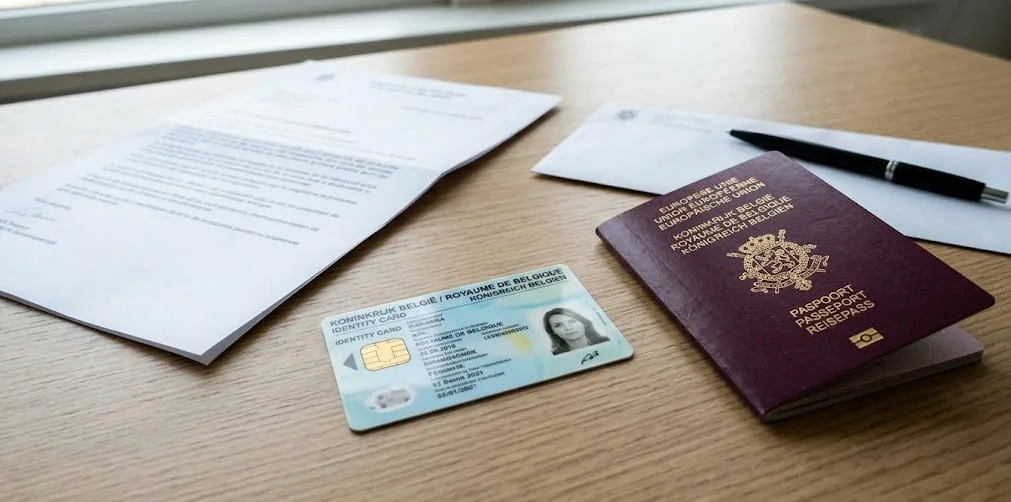
Belgium offers pathways for non-EU investors and entrepreneurs to obtain residency through business investment. We guide you from company registration to residence permit approval.
Belgium does not have a formal "golden visa" programme, but non-EU investors can obtain a Belgian residence permit through several established pathways — most commonly by registering a Belgian company, obtaining a professional card, and applying for a D visa. LawSupport provides end-to-end support for investors seeking Belgian residency through business investment.
Investment Pathways to Belgian Residency
There are three primary routes for investors to obtain a Belgian residence permit:
1. Self-Employed Professional Card + D Visa (Most Common)
The most straightforward path for non-EU investors. You register a Belgian company, apply for a professional card (beroepskaart/carte professionnelle) as self-employed director, and then obtain a D visa to enter Belgium.
Investment: No fixed minimum — assessed on business plan viability
Requirement: Active management role in the Belgian company
Professional card validity: Up to 5 years, renewable
Family reunification: Yes, spouse and children
2. Single Permit (Combined Work + Residence)
If you structure your involvement as an employee/director of the Belgian company (rather than self-employed), you may apply for a single permit — a combined work and residence authorisation. This is common for investors who appoint themselves as managing director with an employment contract.
3. EU Blue Card
For highly qualified investors/executives with a salary above €58,884/year (2026 threshold), the EU Blue Card provides a fast-track residence permit. Requires a work contract with the Belgian company and recognised qualifications.
Most investor applicants register a BV/SRL (no minimum capital) or NV/SA (€61,500 minimum). The company registration can proceed without a residence permit — you can register as a foreign founder remotely via power of attorney. You will also need to open a Belgian bank account for the company.
Step 2 — Professional Card Application
Non-EU nationals who will actively manage their Belgian company must obtain a professional card. The application is filed with the regional authority:
Brussels: Brussels Economy and Employment (application fee ~€90)
Flanders: Department of Work and Social Economy (application fee ~€140)
Wallonia: SPW Économie, Emploi, Recherche
Key documents: business plan, financial projections, proof of investment/capital, Belgian company registration documents, passport, and evidence of economic benefit to Belgium (job creation, innovation, trade).
Step 3 — D Visa Application
Once the professional card is approved, you apply for a long-stay D visa at the Belgian embassy or consulate in your country of residence. Processing typically takes 2–4 weeks. Required documents: approved professional card, passport, medical certificate, clean criminal record (apostilled), and proof of sufficient financial means.
Step 4 — Commune Registration & Residence Card
Upon arrival in Belgium, you register at the local commune (gemeentehuis/maison communale) within 8 days. After identity verification and a police visit to confirm your address, you receive your Belgian residence card (A card or B card depending on the permit type).
What the Authorities Assess
Belgian authorities evaluate investor applications on several criteria:
Business plan viability — realistic revenue projections, market analysis
Belgium does not have a formal 'golden visa' programme like Portugal or Spain. However, non-EU investors can obtain a Belgian residence permit through several pathways: registering and actively managing a Belgian company (self-employed professional card + D visa), making a significant investment that creates jobs, or establishing a Belgian company that sponsors a work permit.
There is no fixed minimum investment amount defined by law. The authorities assess each application on its merits — focusing on the business plan's viability, job creation potential, and economic benefit to Belgium. In practice, investments of €200,000+ with a clear business plan are generally viewed favourably.
The process typically takes 3–6 months from application to approval. This includes professional card application (6–12 weeks in Brussels/Flanders), D visa processing at the Belgian embassy (2–4 weeks), and commune registration upon arrival. Document preparation should begin at least 2 months before filing.
Yes. Once you hold a valid Belgian residence permit, your spouse/partner and dependent children under 18 can apply for family reunification (gezinshereniging/regroupement familial). They receive their own residence permits and can work in Belgium.
Yes. After 5 years of legal, continuous residence in Belgium with a valid residence permit, you can apply for permanent residence (EU long-term resident status). After 5 years, you may also be eligible for Belgian nationality, subject to integration and language requirements.
If you hold a Belgian residence permit, you must maintain Belgium as your principal residence. Extended absences (more than 12 consecutive months) can result in loss of your residence permit. Short business trips abroad are permitted.
A professional card (beroepskaart/carte professionnelle) is required for non-EU nationals exercising self-employed activities in Belgium, including company directors actively managing their business. It is issued by the regional authority and valid for up to 5 years.
Real estate investment alone does not qualify for a Belgian residence permit. The investment must involve active economic activity — typically a registered Belgian company with a viable business plan and job creation potential. Passive real estate ownership is not sufficient.
Start Your Investor Journey in Belgium
From company registration to residence permit — we handle the complete process for international investors.