Everything you need to know about Belgian residence permit requirements — documents, processing times, fees, and the step-by-step application process for EU and non-EU citizens.
Obtaining a Belgian residence permit requires specific documents, fees, and processing steps that vary depending on your nationality and the purpose of your stay. This page covers the complete requirements for all major permit categories — from EU citizen registration to non-EU work permits and self-employed professional cards.
Processing times are indicative. The Immigration Office (DVZ/OE) may request additional documents, which extends timelines. We recommend starting applications at least 4–6 months before your planned arrival.
General Document Requirements (All Permit Types)
Regardless of the permit category, all applicants need:
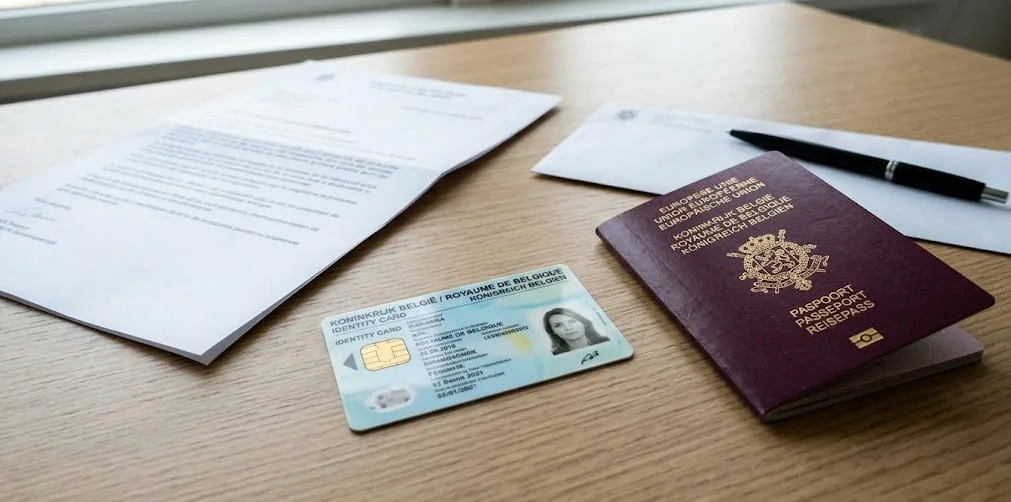
Valid passport — at least 12 months remaining validity, with 2 blank pages
Criminal record certificate — from your country of residence and any country where you lived for 6+ months in the last 5 years. Must be apostilled (Hague Convention) or diplomatically legalised, and translated by a sworn translator if not in French, Dutch, or German. Maximum 6 months old at time of application.
Medical certificate — issued by an approved physician, confirming no diseases that pose a risk to public health (tuberculosis screening required for certain nationalities)
Proof of accommodation — Belgian lease agreement, hotel reservation, or letter from host
Proof of sufficient financial means — bank statements, employment contract, or sponsor letter showing you can support yourself (and dependants)
Requirements by Category
EU/EEA/Swiss Citizens
EU citizens have the right to reside in Belgium. No visa or permit is needed before arrival. Within 3 months, you must register at the commune:
Valid passport or national ID card
Proof of economic activity (employment contract, company registration, or self-employment proof) OR proof of sufficient means + health insurance (for non-workers)
Registration form at the commune
Receive: E card (5 years, renewable) → after 5 years: E+ card (permanent)
Processing times vary: EU citizens receive registration within 1–3 months. Non-EU applicants via D visa typically wait 2–6 months total (including professional card or single permit processing). The Immigration Office (DVZ/OE) aims to process single permit applications within 4 months, but delays are common.
Core documents include: valid passport (12+ months validity), proof of purpose (work contract, professional card, enrollment letter), criminal record certificate (apostilled, max 6 months old), medical certificate, proof of accommodation in Belgium, proof of sufficient financial means, and passport-size photos. Non-EU documents need apostille or legalization plus sworn translation.
Costs vary by permit type: D visa fee ~€180, residence card issuance ~€50, professional card application €90–€140 (regional), single permit application ~€350 (retribution fee). Total administrative costs typically range from €300–€700, excluding legal assistance.
Belgium issues several residence cards: A card (limited stay, 1 year renewable), B card (unlimited stay), C card (temporary protection), D card (EU long-term resident), E/E+ cards (EU citizens), F/F+ cards (family members of EU citizens), and H card (EU Blue Card holder).
Yes. All foreign nationals arriving in Belgium must register at the local commune (gemeentehuis/maison communale). EU citizens must register within 3 months; non-EU citizens within 8 days of arrival. A police officer will visit your address to verify residence before the commune issues your card.
It depends on the permit type. Single permit applicants receive a temporary work authorisation (Annex 46) while waiting. Professional card holders can work once the card is approved. EU citizens can work immediately upon arrival. D visa holders should wait until commune registration is complete.
An Annex 15 (bijlage 15/annexe 15) is a temporary residence document issued by the commune while your residence permit application is being processed. It serves as proof of legal stay and is typically valid for 45 days, renewable until a decision is made on your application.
Apply for renewal at your local commune at least 30 days before your current permit expires. Required documents: current residence card, valid passport, proof that the basis for your stay continues (employment contract, professional card, etc.), and proof of Belgian address. Processing typically takes 2–6 weeks.
Get Expert Help With Your Residence Permit
We handle document preparation, application filing, and communication with Belgian authorities.