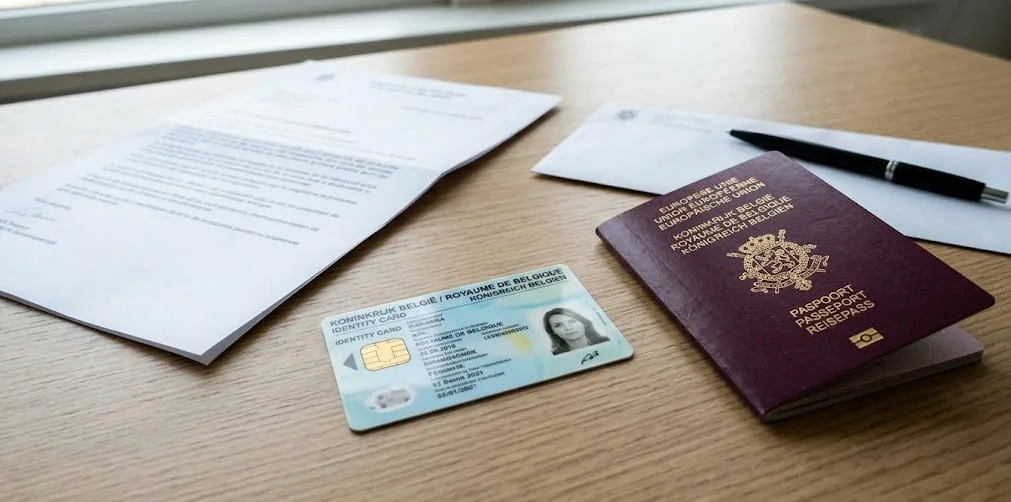
Non-EU freelancers, entrepreneurs, and consultants need a professional card (beroepskaart) to work as self-employed in Belgium. We manage the full application from business plan to residence permit.
To work as a self-employed professional in Belgium, non-EU citizens must obtain a professional card (beroepskaart/carte professionnelle) — Belgium's equivalent of a self-employed visa. This card is the gateway to a Belgian residence permit for freelancers, consultants, sole proprietors, and company directors who actively manage their business from Belgium.
EU/EEA citizens and Swiss nationals do not need a professional card — they have automatic freedom of establishment under EU law.
Who Needs a Professional Card?
A professional card is required for any non-EU national who wants to:
Work as a freelancer or independent consultant in Belgium
Operate a sole proprietorship (eenmanszaak/entreprise individuelle)
Serve as an active director/manager of a Belgian company (e.g., BV/SRL)
Exercise any self-employed professional activity from Belgian territory
You do NOT need a professional card if you are a passive shareholder (not actively managing the company) or if you are an EU/EEA/Swiss citizen. Investors who only hold shares without active management may not need one.
Application Process — Step by Step
1
Business Plan
Prepare plan + financial projections
→
2
Documents
Collect, apostille, translate
→
3
Application
Submit to regional authority
→
4
D Visa
Apply at Belgian embassy
→
5
Arrival
Commune registration + residence card
Step 1 — Business Plan Preparation
The cornerstone of your application. The business plan must demonstrate:
Economic benefit to Belgium — job creation, innovation, trade, or investment
Financial viability — realistic revenue projections for 3 years
Market analysis — who are your clients, what need do you fill
Your qualifications — relevant experience, education, portfolio
Sufficient financial means — proof you can support yourself during the startup phase
Criminal record certificate (apostilled, translated, max 6 months old)
Proof of qualifications — diplomas, certificates, work references
Business plan with financial projections
Company registration documents (if you already have a Belgian company)
Proof of Belgian address or registered office
Medical certificate (for D visa stage)
Step 3 — Submit Application
The professional card application is submitted to the competent regional authority:
Region
Authority
Fee
Processing Time
Brussels
Brussels Economy and Employment
~€90
2–4 months
Flanders
Department of Work and Social Economy
~€140
1–3 months
Wallonia
SPW Économie, Emploi, Recherche
~€140
2–4 months
If you are applying from abroad (most common), the application is submitted through the Belgian embassy or consulate in your country of residence, which forwards it to the regional authority.
Step 4 — D Visa
Once the professional card is approved, you apply for a long-stay D visa at the Belgian embassy. Additional documents: approved professional card, passport, medical certificate, proof of accommodation in Belgium, and proof of sufficient funds. Processing: 2–4 weeks.
Step 5 — Arrival & Registration
Upon arrival in Belgium:
Register at the local commune within 8 days
Receive a police visit to confirm your address
Obtain your Belgian residence card (A card, valid for duration of professional card)
Enrol with a social insurance fund (sociaal verzekeringsfonds/caisse d'assurances sociales)
Register with a health insurance fund (ziekenfonds/mutuelle)
A professional card is a permit that allows non-EU nationals to exercise self-employed professional activities in Belgium. It covers freelancers, sole proprietors, and directors of Belgian companies who actively manage the business. The card is issued by regional authorities and is valid for up to 5 years.
No. EU/EEA citizens and Swiss nationals have automatic freedom of establishment in Belgium. They can start self-employed activities by simply registering at the local commune and enrolling with a social insurance fund. No professional card is required.
Application fees vary by region: approximately €140 in Flanders, €90 in Brussels, and €140 in Wallonia. Additional costs include document legalization, translations, and professional advisory fees. The total process cost (including legal support) typically ranges from €2,000–€4,000.
Processing times vary by region: Brussels typically takes 2–4 months, Flanders 1–3 months, and Wallonia 2–4 months. Incomplete applications or requests for additional documents can extend the timeline. We recommend starting the process at least 4 months before your planned arrival.
Key documents include: completed application form, business plan with financial projections, proof of qualifications/experience, company registration documents (if applicable), passport copy, clean criminal record certificate (apostilled), proof of sufficient financial means, and proof of Belgian address or registered office.
Yes, but only as a sole proprietor (eenmanszaak/entreprise individuelle). You still need a professional card if you are a non-EU citizen. Many freelancers prefer to register a BV/SRL for liability protection and tax optimisation, but a sole proprietorship is simpler to set up.
Yes. If you already hold a Belgian residence permit as an employee, you can apply for a professional card to switch to self-employed status. You must apply before starting self-employed activities. The new professional card replaces your work permit basis.
You can appeal the decision within 30 days. Appeals are heard by the federal appeal commission (Raad voor Economisch Onderzoek/Conseil d'Enquête Économique). Common refusal reasons include an insufficiently detailed business plan, lack of economic benefit, or incomplete documentation.
Start Your Self-Employed Career in Belgium
We manage the full professional card application — from business plan to commune registration.