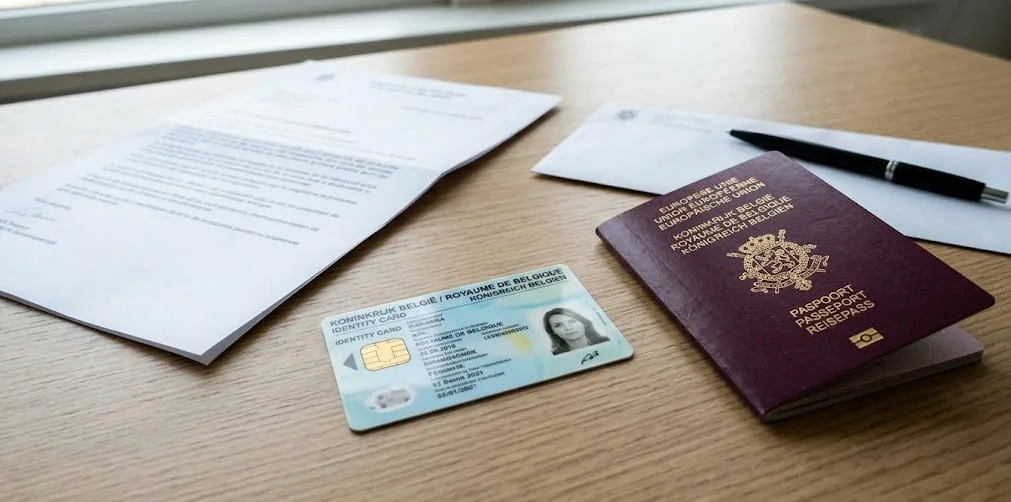
Non-EU employees need a work authorisation to work in Belgium. Since 2019, the single permit combines work and residence into one process. We guide employers and employees through every step.
Non-EU nationals who want to work as employees in Belgium need a work authorisation. Since the 2019 reform, most employment-based permits have been consolidated into the single permit (gecombineerde vergunning/permis unique), which combines work authorisation and residence permit into a single application. LawSupport assists both employers and employees with the full permit process.
EU/EEA citizens and Swiss nationals have automatic right to work in Belgium — no work permit needed.
The single permit is now the default work authorisation for non-EU employees staying in Belgium for more than 90 days. Key points:
Employer-initiated — the Belgian employer files the application
Regional processing — work authorisation assessed by the region (Brussels, Flanders, or Wallonia)
Federal processing — residence component assessed by the Immigration Office (DVZ/OE)
One card — the employee receives a single residence card (A card) with work authorisation
Legal deadline — 4 months from complete application (in practice: 2–4 months)
Labour Market Test
For standard work permits, the regional authority checks whether a suitable candidate is available in the Belgian/EU labour market. The employer must demonstrate genuine recruitment efforts. Exemptions from the labour market test apply for:
Highly qualified workers (salary-based exemption)
EU Blue Card applicants
Intra-corporate transfers (ICT)
Workers in officially recognised shortage occupations
Researchers and academics
Posted workers (certain conditions)
Application Process
Step 1 — Employer Prepares Application
The Belgian employer (or their legal representative) prepares the application dossier:
Proof of labour market test (if applicable — job postings, VDAB/Actiris/Forem registration)
Employer's company documents (CBE registration, annual accounts)
Step 2 — Regional Authority Reviews Work Component
The regional employment authority assesses whether the work authorisation criteria are met. This includes checking the labour market test, salary level, and employment conditions.
The DVZ/OE reviews the residence aspects: criminal record, security check, and general admissibility. The two reviews happen in parallel.
Step 4 — Approval & D Visa
Once both components are approved, the employee applies for a D visa at the Belgian embassy/consulate in their country of residence. Processing: 2–4 weeks.
Step 5 — Arrival & Commune Registration
The employee enters Belgium, registers at the commune within 8 days, and receives an A card (single permit) after a police address verification. See residence permit requirements for full details.
EU Blue Card
The EU Blue Card is designed for highly qualified non-EU workers:
No. EU/EEA citizens and Swiss nationals have automatic right to work in Belgium. They only need to register at the local commune within 3 months of arrival. No work permit, single permit, or professional card is required.
Since 2019, the single permit (combined permit) has replaced work permit B for most employment situations. The single permit combines work authorisation and residence into one application. Work permit B still exists for short-term assignments and specific categories (e.g., Au pairs, trainees, posted workers under 90 days).
Single permit processing takes 2–4 months (legal maximum: 4 months from complete application). Work permit B takes 2–5 weeks. EU Blue Card processing takes 3–4 months. The employer must initiate the application, and processing times start from submission of a complete file.
There is no universal minimum salary for a standard single permit — the employer must offer market-rate wages. However, specific categories have thresholds: EU Blue Card requires €58,884/year (2026), highly qualified workers under 30 require a lower threshold, and ICT permits have their own salary floors.
With a single permit, you must apply for a new permit if you change employers during the first year. After renewal, some permit types allow open labour market access. EU Blue Card holders can change employers after 12 months with notification to the authorities.
The Belgian employer initiates the application. For a single permit, the employer files the work authorisation request with the regional authority, which then forwards it to the Immigration Office (DVZ/OE) for the residence component. The employee applies for a D visa at the Belgian embassy once approved.
For standard work permits, the regional authority checks whether a suitable candidate is available in the Belgian/EU labour market before approving a non-EU hire. This is called a labour market test. Exemptions apply for highly qualified workers, ICT transfers, shortage occupations, and EU Blue Card applicants.
Yes. After 5 years of legal, continuous residence in Belgium on a valid work-based residence permit, you can apply for EU long-term resident status (permanent residence). EU Blue Card holders may qualify after 5 years across EU member states (with at least 2 years in Belgium).
Hire International Talent in Belgium
We manage the entire work permit process — from application filing to commune registration.